A drill that is easy to understand
Coaching points, directions, variations, and the age it suits.
A drill written as a paragraph gets re-explained every time
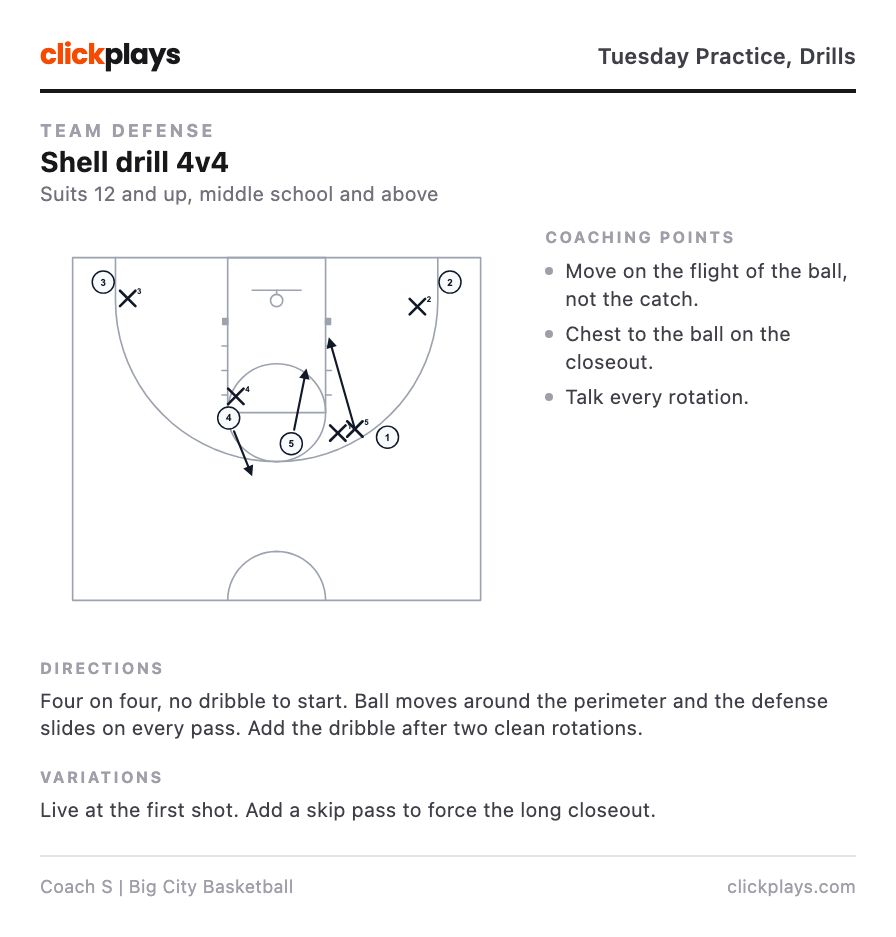
A drill with a diagram does not. Each one keeps a single picture, the two or three coaching points you say out loud every time, the directions, and any variations. It is the same drill next season as it was this one, and it is the same drill in your hands as in your assistant's.
-
01
One diagram, borrowed from a play
Everything you draw is a play, and a drill borrows one. There is no second drawing tool to learn and no second library to keep in step with the first.
-
02
Two or three coaching points, not paragraphs
The ones you say every single time. They print with the drill, and they are the first line an assistant reads.
-
03
Variations live with the drill
Run it harder, smaller, or with a constraint added. A variation sits with its parent instead of becoming four near-identical entries you have to tell apart in a list.
-
04
Pick a drill by sight, not from memory
Building a practice, your whole bank sits beside the plan unfiltered. You pick the drill you want by recognising it, instead of trying to remember what you called it three months ago.
Explain the drill once, not every season!
Write the drill down properly one time and the sheet does the explaining after that.
- Building a practice out of drills you already trust
- Handing a drill to an assistant who has never run it
- Keeping the version that worked, not the one you half remember
- Finding a drill that suits the age you are actually coaching
One tool for each job
Every play your team runs, in the order you teach it, printed as one book.
- The plays are in four places.
- One playbook per team, or per season, or per side of the ball. A play lives in one book and you drag it into the order you install it.
- I printed the wrong version again.
- Print the whole book in one job. Every play, every step, one card each, in your order, with the play name on the card.
- The new assistant needs everything by Tuesday.
- Print the book once and hand it over, or save it as a PDF and send the file. Every play, every step, one card each.
Draw a play your team can actually read, one step per beat instead of twelve arrows on one picture.
- They ran it wrong on Tuesday.
- A play runs three to six steps, and each step shows only what moves on that beat. Nobody has to decode the whole play at once.
- I cannot remember why we set that screen.
- The coaching point sits on the frame it explains, not in a paragraph underneath. It is still there in November.
- My assistant missed practice.
- One play to a page, a whole playbook in one job, or a PDF. Printing is included on every plan.
Plan a practice that fits the gym time you actually have, then print the sheet that runs it.
- We ran out of time again.
- Every block gets minutes, and the running total sits against your practice window. The plan tells you it is long before the gym does.
- What was that drill called?
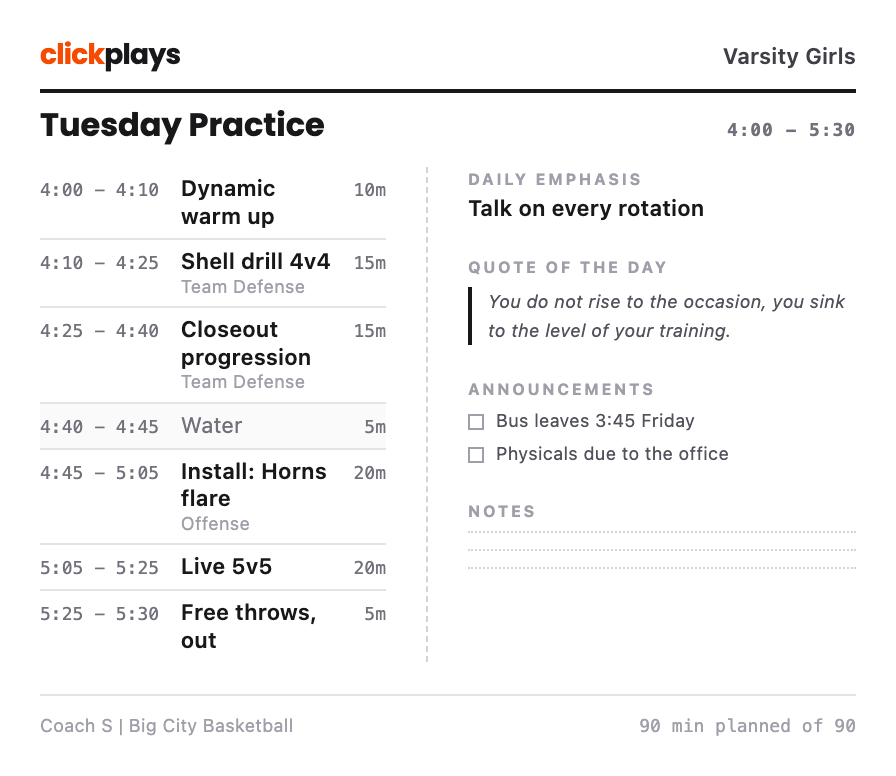
- A block points at a drill from your bank, and the drill brings its diagram and coaching points onto the printed sheet with it.
- I rebuilt last week from scratch.
- Copy the plan and change one block. Tuesday takes minutes when last Tuesday is already there.
Frequently asked questions
Does a drill need a diagram?
Do drills have their own timings?
Can I make my own categories?
Do drills print with the practice plan?
Can I tell which drills suit younger teams?
Start with the drill you explain most
Add the drill you have described out loud a hundred times, and see whether you ever describe it again.
Start drawingSeven days free. Your drills stay private unless you share one.
