Draw Hockey Drills Your Skaters Can Read
Real rink, real skating notation, taped to the glass.
Runs in your browser. Nothing to download, seven days free.
Five guys drifting in the same hemisphere.
That is how coaches describe their breakout. The whiteboard version looked fine.
-
1
The hemisphere problem
Breakouts, D-zone coverage, the power play: coaches call them the hardest things to teach, and the reason is always positioning. Teach a spot as a rough area and five skaters drift through the same hemisphere of ice.
-
2
Ice costs dollars a minute
Rink time costs dollars a minute wherever you play. A drill explained at the whiteboard for three minutes, then re-explained on the ice for three more, just spent six of the minutes you booked for skating.
-
3
Your playbook is a binder
The drills live on paper: rink templates drawn by hand, one sheet per drill, redrawn when the drill changes, photocopied when an assistant needs one. The binder is the system, and the binder has one copy.
The drill was never the problem. The drawing was.
Hand-drawn sheets have no standard: one coach draws a drill one way, an assistant marks it up to make sense of it, and the player cannot tell a skate from a pass. ClickPlays draws every drill in one notation, the one hockey already reads: skating is solid, backward skating is C-cuts, carrying the puck is the wavy line, a pass is dashed, a shot ends in a target. The rink is the real 200 x 85, with the faceoff circles, dots, hash marks and creases where they actually are, so a position is a coordinate, not a hemisphere.
-
Five skaters, one hemisphere
A breakout is five exact spots, not five suggestions. Place skaters on the real dots, walls and slot, and the printed sheet shows each player a position they can point to.
-
Three coaches, three notations
Solid skate, C-cut backward skating, wavy puck carry, dashed pass, shot to a target. Every coach on your staff draws with the same five arrows, so every sheet reads the same to every player.
-
The binder has one copy
Every drill saves to your playbook with a name. Change it and the sheet updates. Print one drill or the whole practice, and every assistant holds the current version.
Wheel breakout
3 steps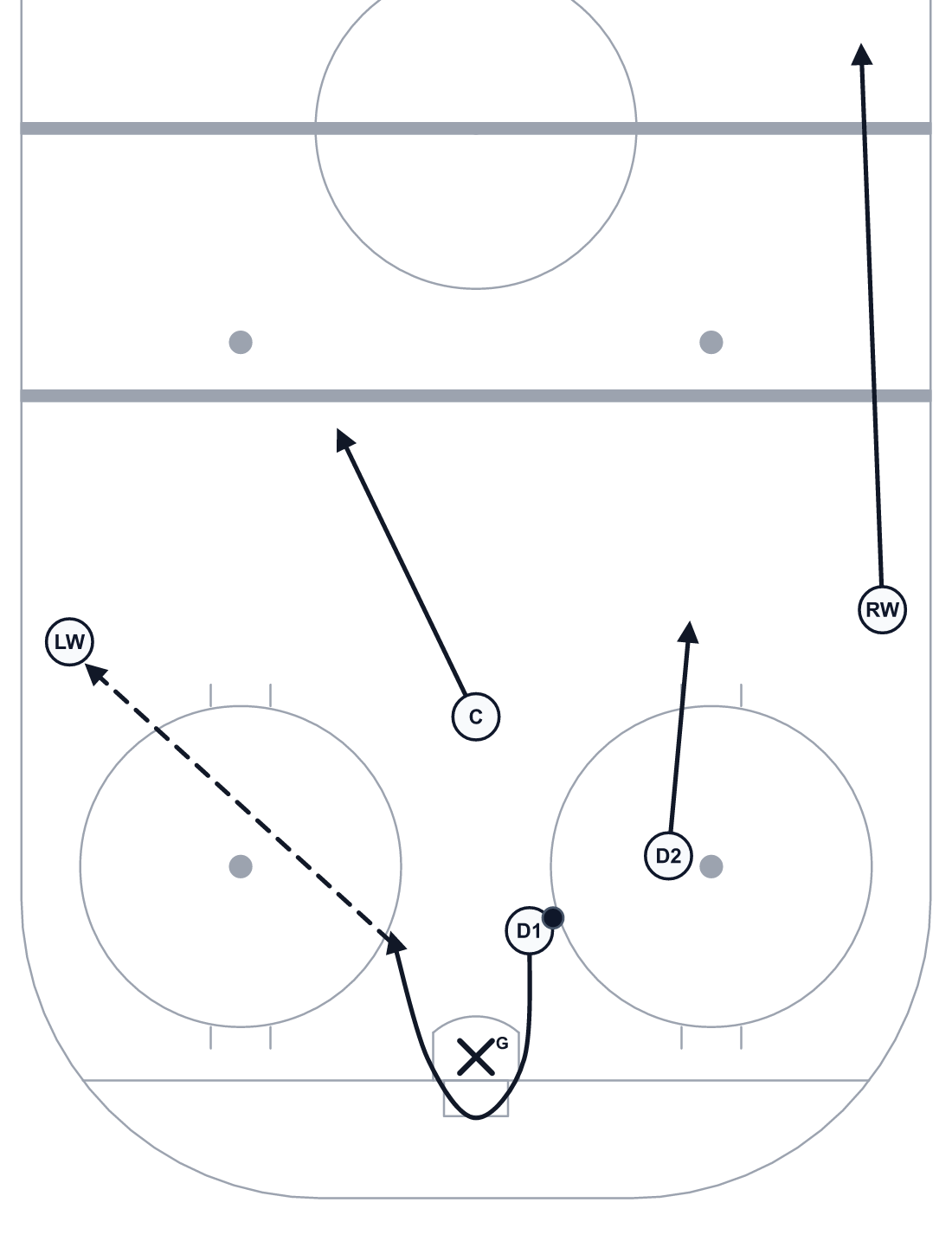
ClickPlays is not affiliated with or endorsed by USA Hockey, the NCAA, or the NHL. Rink dimensions follow the published rules of each organization.
Your play editor and a practice planner.
- Plays
- Draw your plays. It saves, and print them anytime.
- Playbooks
- Your plays in one book instead of a binder.
- Drills
- A play you run at practice, with the reps attached.
- Practice planner
- Plan your practice, print and share it.
- Sideline
- One link you send to your parents and staff.
All of it, seven days free.
Start drawingDraw your plays, build your practices!
-
clickplays Coach D.K.
Pivot and go
3 steps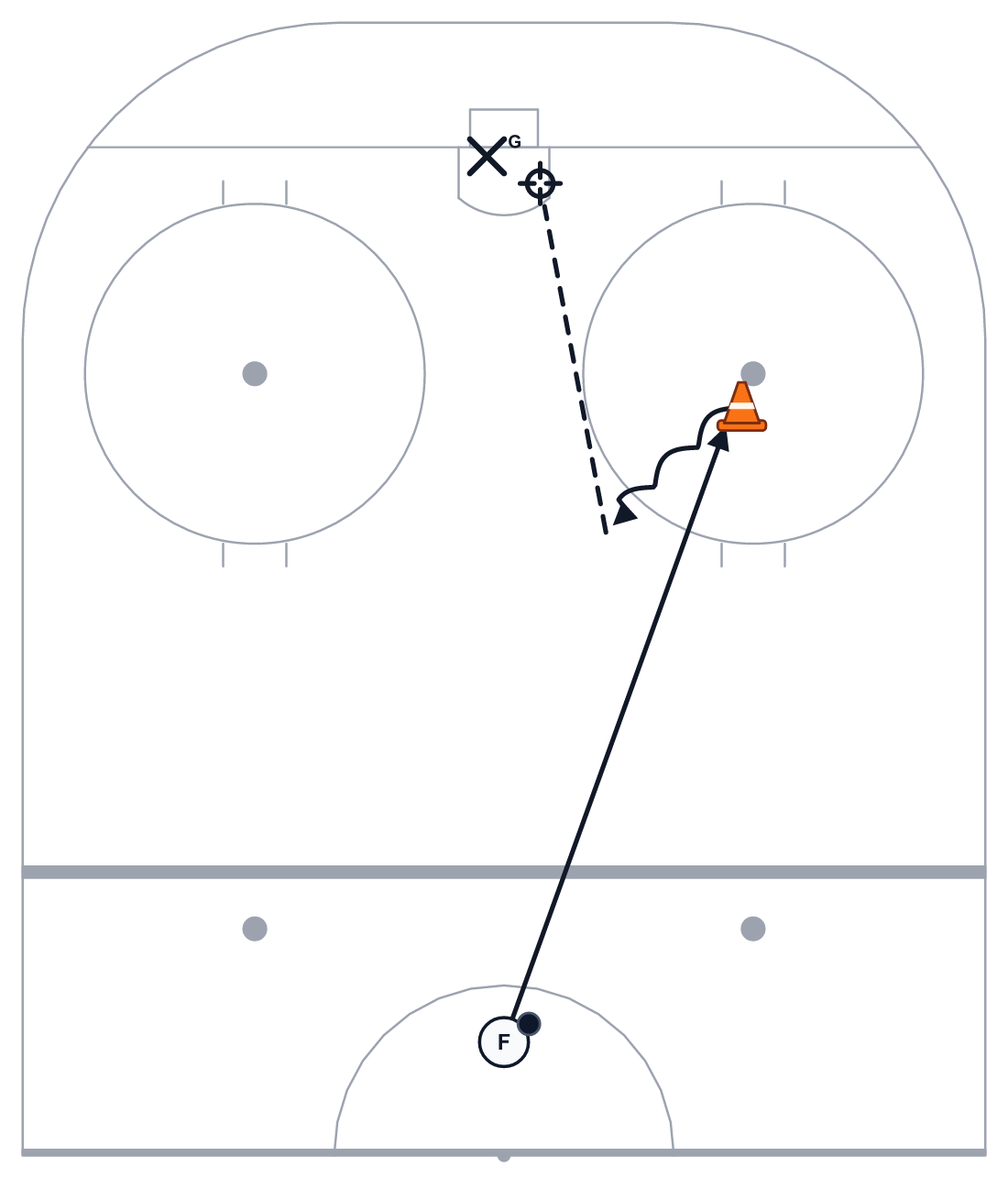 clickplays.com Page 1 of 11
Draw your play
Two minutes on ClickPlays play editor, and that is the last time you draw it. It is still there next season, and it still prints.
-
clickplays 15 minTeam Systems
Wheel breakout
- D1 wheels, never stops behind the net
- Strong-side wing hits the wall
- Far wing stretches to the red line
DirectionsBoth ends at once, whistle every rep. Five each way, then flip the D pair.
2Make it a drill
Your play can be used to make a drill. Nothing gets redrawn. You just write down instructions, any variants and included in the practice planner.
-
clickplays 12U Travel
Tuesday Ice
5:45 - 6:505:45 - 5:55 Edges and transitions Skating 10m5:55 - 6:10 Puck protection stations Puck Control 15m6:10 - 6:25 Wheel breakout Team Systems 15m6:25 - 6:45 Cross-ice 3v3 Small-Area Games 20m6:45 - 6:50 Stretch, off 5mclickplays.com 65 min planned of 653Plan your practice
The drills you already built become your next practice plan, and the minutes add up against the gym time you actually have.
Next season starts where you left off.
Last season opens, prints and runs again. Nothing to redraw, nothing lost in a move, and an assistant who joined the staff this season can read the sheet without you standing over him.
Seven days free. Then $149 a year.
Start drawing your plays today!No Credit Card and No Contracts Required!
Questions coaches ask
- Is there a tool to draw hockey drills?
- Yes. ClickPlays runs in the browser: unlimited drills, plays and playbooks, the play creator, saving, printing and sharing. Seven days free, no card, then $29 a month or $149 a year.
- Is the rink regulation size?
- Yes. The rink is the North American 200 x 85 feet sheet shared by USA Hockey, the NCAA and the NHL, with faceoff circles, dots, hash marks, creases and lines where the rulebooks put them. An NHL variant adds the goaltender trapezoid.
- Does ClickPlays use standard hockey drill notation?
- Yes. Skating draws solid, backward skating draws as C-cuts, carrying the puck draws as the wavy line, passes are dashed, and a shot ends in a target reticle.
- Can I diagram systems like breakouts and the power play?
- Yes. Place all five skaters plus the goalie on exact rink coordinates, draw each route, and use steps to show the sequence: retrieval, outlet, exit. Save each system under its own name.
- Do my players need accounts to see the drills?
- No. Print the sheet or export a PDF and tape it to the glass or the locker-room wall. Online sharing is for your staff, who sign in for read-only access.
You are going to draw it again anyway.
Unlimited drills, so the whole binder gets drawn, not just the first page. Seven days free. If your first sheet does not come out cleaner than the photocopy in the binder, cancel before day seven and you have lost nothing.
No Credit Card and No Contracts Required!
